
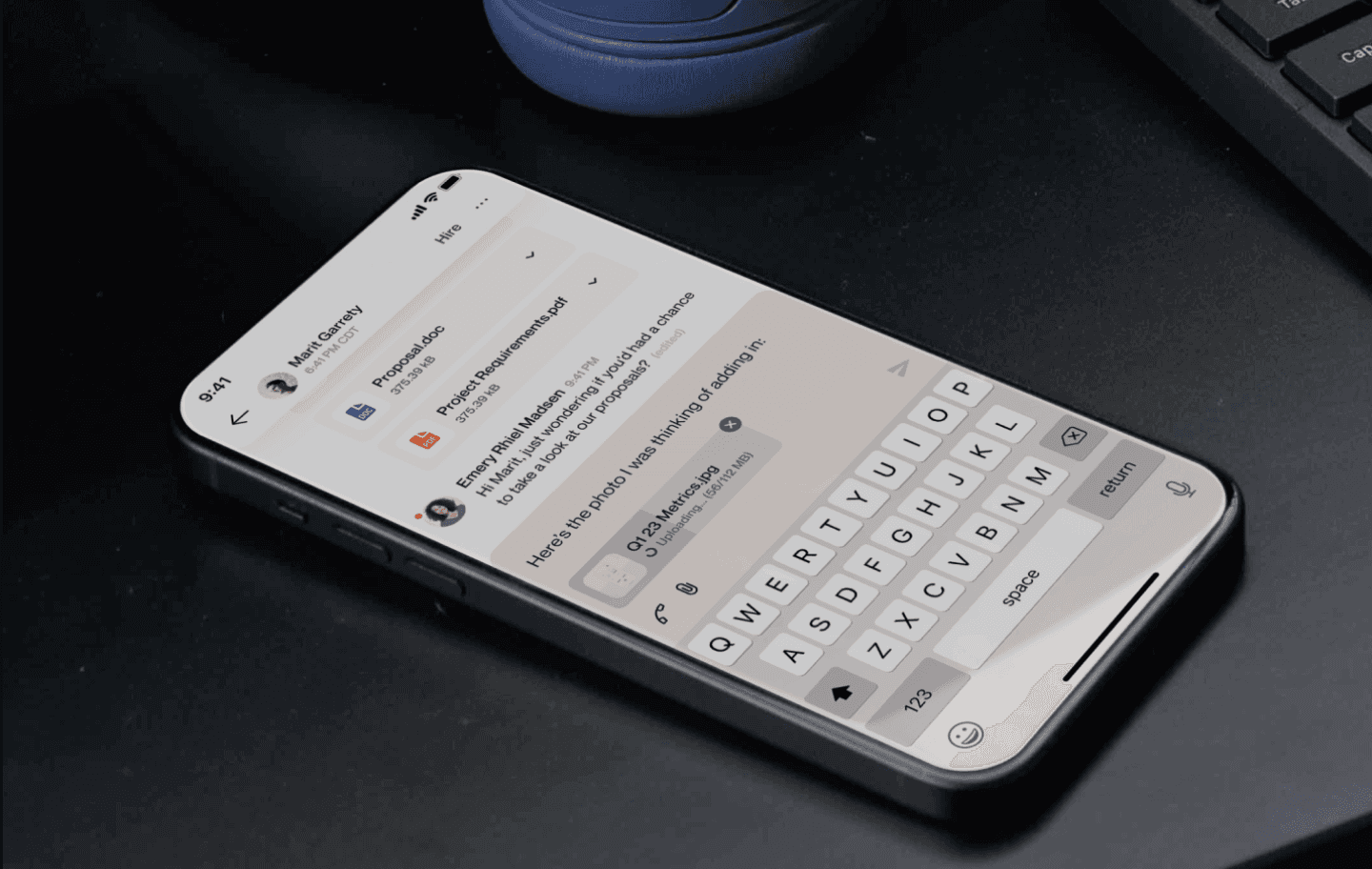
Mobile App Messaging Platform Rebuild
Mobile App Messaging Platform Rebuild
Built a fully native messaging experience used by over 5M monthly active users on iOS and Android.
Built a fully native messaging experience used by over 5M monthly active users on iOS and Android.
Date
Oct 2, 2023
Category
Platform Development
Platform Development
Overview
A leading freelancing platform brought me in to lead a high-impact rebuild of their mobile platform messaging experience. Messaging is one of the most essential workflows for hiring and interviewing, but the existing product was unreliable and outdated on the mobile app.
As a product lead, I was responsible for the end-to-end strategy and execution. I led a large cross-functional team of over twenty across engineering and design to rethink the experience from the ground up and deliver a faster, more trusted mobile messaging system.
Challenge
Only 24 percent of active users were using the mobile app. Through research, we uncovered a core reason why: users didn’t trust the messaging experience. It felt clunky, outdated, and often led to dropped conversations or missed interviews.
The core issues were around usability and performance, especially with messaging as a key use case. It was built using webviews stitched into the app, which led to frequent crashes, laggy performance (over 6s to load each message), and messages that failed to send. Users couldn’t rely on it to communicate, let alone close deals or schedule interviews.
Customer surveys and app store reviews consistently pointed to messaging as the most broken part of the app. It was also the most important. Without fixing this, mobile adoption would continue to lag, and trust in the platform would stay low.
Approach
I led the strategy and execution for a fully native rebuild of messaging on both iOS and Android. This wasn’t just a UI polish; we replaced the entire webview-based stack with a performant, platform-native architecture built for speed, trust, and long-term scalability.
We set a high design bar from the start. I worked closely with design, engineering, and product leadership to deliver a best-in-class mobile messaging experience, drawing inspiration from leading consumer apps like WhatsApp, Messenger, and Telegram. The goal was to build something that felt familiar yet modern, balancing utility and polish in equal measure.
Key focus areas included:
Rebuilding all messaging surfaces natively for iOS and Android, with unique features that took advantage of native capabilities
Introducing real-time sync, online presence, and smoother message delivery, as well as offline use-cases
Adding expected features like reactions, push notifications, and media handling
Optimizing layout, spacing, and gesture patterns for better readability and speed
Beyond the surface-level improvements, the new experience was architected to support future use cases like audio notes, message-level actions, and structured attachments. In our first launch as a beta, we conducted a robust beta feedback program to gather key customer feedback to address before we fully launched this as a GA.
Outcome
Performance was significantly improved, with a 95% rendering speed decrease on iOS, and a 85% decrease on Android. Unsuccessful messages sent were reduced by over 60%. Lastly, we saw a 7% increase in hiring activity with the new and improved messaging experience, and also built a native messaging platform that other teams could build incremental features on. Reach out for more detailed information about this case study!
Overview
A leading freelancing platform brought me in to lead a high-impact rebuild of their mobile platform messaging experience. Messaging is one of the most essential workflows for hiring and interviewing, but the existing product was unreliable and outdated on the mobile app.
As a product lead, I was responsible for the end-to-end strategy and execution. I led a large cross-functional team of over twenty across engineering and design to rethink the experience from the ground up and deliver a faster, more trusted mobile messaging system.
Challenge
Only 24 percent of active users were using the mobile app. Through research, we uncovered a core reason why: users didn’t trust the messaging experience. It felt clunky, outdated, and often led to dropped conversations or missed interviews.
The core issues were around usability and performance, especially with messaging as a key use case. It was built using webviews stitched into the app, which led to frequent crashes, laggy performance (over 6s to load each message), and messages that failed to send. Users couldn’t rely on it to communicate, let alone close deals or schedule interviews.
Customer surveys and app store reviews consistently pointed to messaging as the most broken part of the app. It was also the most important. Without fixing this, mobile adoption would continue to lag, and trust in the platform would stay low.
Approach
I led the strategy and execution for a fully native rebuild of messaging on both iOS and Android. This wasn’t just a UI polish; we replaced the entire webview-based stack with a performant, platform-native architecture built for speed, trust, and long-term scalability.
We set a high design bar from the start. I worked closely with design, engineering, and product leadership to deliver a best-in-class mobile messaging experience, drawing inspiration from leading consumer apps like WhatsApp, Messenger, and Telegram. The goal was to build something that felt familiar yet modern, balancing utility and polish in equal measure.
Key focus areas included:
Rebuilding all messaging surfaces natively for iOS and Android, with unique features that took advantage of native capabilities
Introducing real-time sync, online presence, and smoother message delivery, as well as offline use-cases
Adding expected features like reactions, push notifications, and media handling
Optimizing layout, spacing, and gesture patterns for better readability and speed
Beyond the surface-level improvements, the new experience was architected to support future use cases like audio notes, message-level actions, and structured attachments. In our first launch as a beta, we conducted a robust beta feedback program to gather key customer feedback to address before we fully launched this as a GA.
Outcome
Performance was significantly improved, with a 95% rendering speed decrease on iOS, and a 85% decrease on Android. Unsuccessful messages sent were reduced by over 60%. Lastly, we saw a 7% increase in hiring activity with the new and improved messaging experience, and also built a native messaging platform that other teams could build incremental features on. Reach out for more detailed information about this case study!

© 2025 Agent Alvin. All rights reserved.
© 2025 Agent Alvin. All rights reserved.
© 2025 Agent Alvin. All rights reserved.
© 2025 Agent Alvin. All rights reserved.